
Recent Writings
Coming soon: links to recent essays!
Every Trail Has a History: The Canal Lock Trail
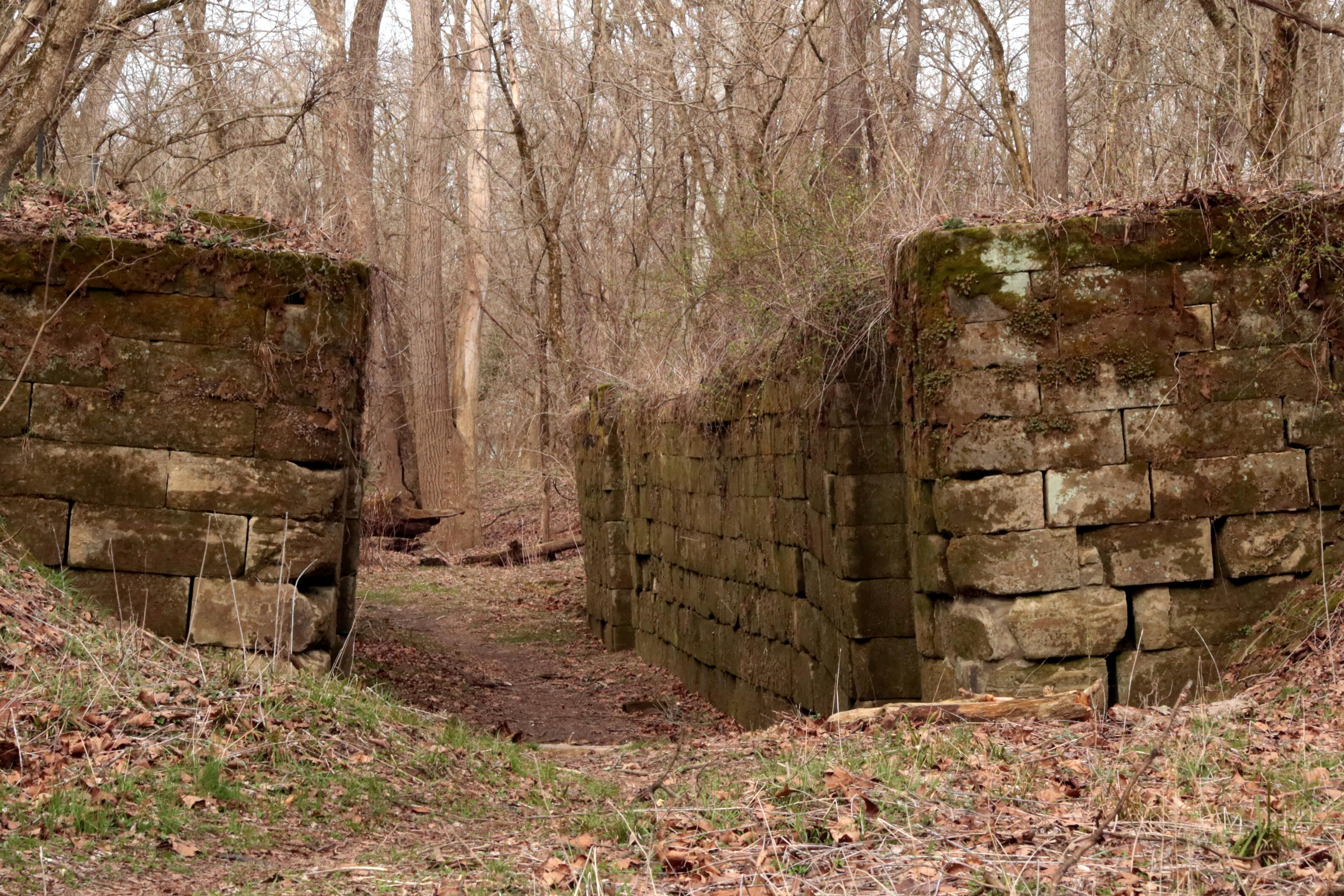
I pause, listening, expecting to hear the sounds of history echoing along this trail. The steady clomp-clomp of mules on the towpath above the river. A long, sad, plaintive note from the horn of a canal boat approaching the lock. The hissing and rumble of a steam engine belching its way through the gorge on the far bank of the river with a line of passenger and freight cars creaking behind. A swift swoosh of an electric interurban train speeding by.Only the faint roar of a jet far overhead is all I hear before the notification bell on my phone interrupts my imaginary time travel. The GPS on my hiking app has noticed that I stopped. It asks if I am finished. I ignore it as I adjust my pack and continue down the trail.The warm air on this early-spring afternoon embraces me and clears my mind. Too early in the season for mosquitoes or other airborne nuisances, I settle into a slow pace along the dirt pathway as it parallels the Licking River in central Ohio.The Canal Lock Trail is not long, the shortest trail in the Blackhand Gorge State Nature Preserve, not even a half mile. A short trail with a long history.I am walking, which goes back to the earliest forms of human travel on this land. People have been in the region for over 10,000 years, according to evidence from nearby sites, such as Flint Ridge, only eight miles from the Blackhand Gorge. Ancient people may have come on foot, or they may have floated down the Licking River in dugout canoes. Either way, they left signs of their presence, though most of it long disappeared.One sign of ancient people was the petroglyph figures on a sandstone cliff above the north bank of the Licking River. The ancient artwork included what early white settlers described as a “black hand.” Today, hikers on the Canal Lock Trail can go down a short spur path to the river where the petroglyphs were carved. But all they will see, besides a picturesque view of the river winding gently through the gorge, is a concave cliff with a stone block pathway set above the river.Workers built the stone roadway in 1828 after blasting the lower portion of the cliff. This piece of engineering made a passage for the Ohio and Erie Canal to maneuver through the gorge. It also obliterated the ancient petroglyphs, including the gorge’s namesake Black Hand.
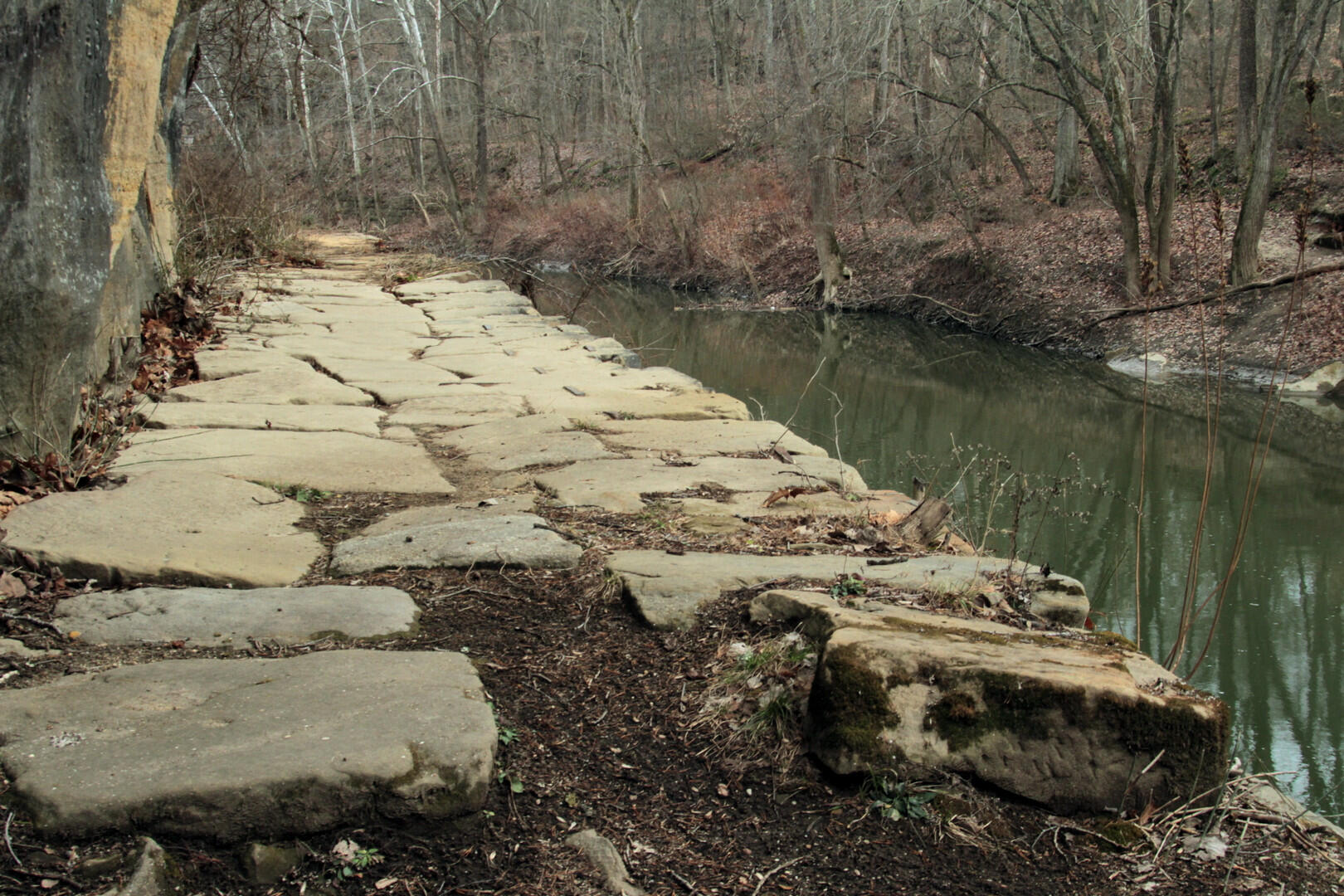
The towpath at the foot of Black Hand Rock above the Licking River (photo by T.S. Bremer)
For sixty-two years, mules and other towing animals pulled canal boats around this cliff. The river was a lake then, with a dam at the lower end of the gorge. Locks lowered and raised the canal boats in and out of the lake. Near the beginning of my hike, I stop to view large stone walls lining a channel beside the trail. I marvel at the stonework, all that remains of Lock 16, where northbound boats left the lake to continue up the canal.Little over two decades after the canal opened to boat traffic, a much faster, noisier, and more dangerous form of transportation entered the gorge on the opposite side of the river from the Canal Lock Trail. At several points as I hike, portions of the paved Black Hand Gorge Trail are visible along the far bank where train tracks once brought passengers and freight racing through the gorge. Traveling about eight times as fast as the boats, the trains eventually made the canal obsolete. The last boat passed through Lock 16 in 1893.